Business9 min readUpdated Mar 31, 2026

COLA in 2026: How to Negotiate a Cost of Living Raise

The Calculory Team

Financial Strategy Analysts

A 3% raise with 4% inflation is a pay cut. Learn how to calculate your personal inflation rate and negotiate a COLA raise with data-driven leverage in 2026.

COLA in 2026: How to Negotiate a Cost of Living Raise

Key Takeaways

  • The standard 3% annual raise is a relic of the past. If headline inflation is 4%, a 3% raise is a 1% real-wage pay cut.
  • Your personal inflation rate matters more than the CPI. If rent and groceries dominate your budget, your cost of living is rising faster than the national average.
  • Negotiating a Cost of Living Adjustment (COLA) should be positioned as maintaining the agreed value of your labor, not as a merit-based promotion.
  • Data is your best leverage. Tools like the Cost of Living Increase Calculator and Salary vs Inflation Calculator provide objective numbers for your manager.
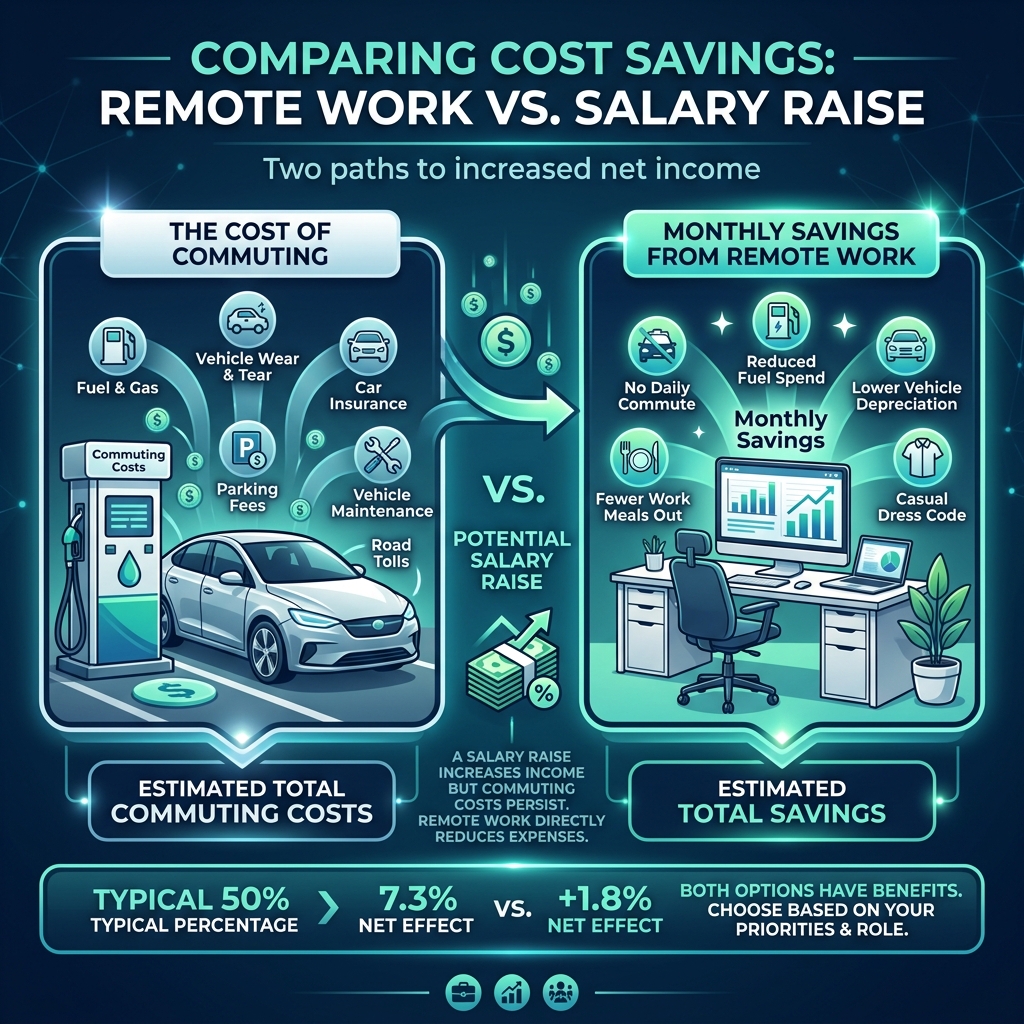
  • If your company enforces strict salary caps, pivot the negotiation to alternative compensation like increased remote work days to lower your commuting costs.

What is a Cost of Living Adjustment (COLA)?

A Cost of Living Adjustment (COLA) is an increase in compensation meant to counteract the effects of inflation on your purchasing power.

For decades, corporate America normalized the 3% annual merit raise. In an era of near-zero inflation, this system worked fine, providing a slight boost in real spending power each year. However, in the post-2020 economy, inflation has frequently spiked well above the 3% mark.

When prices for food, housing, energy, and transportation go up by 5% in a year, a worker receiving a standard 3% raise can suddenly afford fewer goods and services than they could 12 months prior. A COLA is specifically designed to bridge this gap. Unlike a promotion, which pays you more for taking on new responsibilities, a COLA simply ensures you are still being paid the original value of your labor.

2026 Inflation Snapshot: Key Numbers You Need

Before you walk into any salary negotiation, you need to know the current inflation landscape. Here is how prices have been moving across the major spending categories that affect working professionals.

Category 2024 Rate 2025 Rate 2026 Estimate
Overall CPI 3.4% 2.9% 3.1%
Housing and Rent 5.6% 4.8% 4.3%
Groceries and Food 2.1% 2.4% 2.8%
Energy and Utilities 1.3% 3.2% 3.5%
Healthcare 3.1% 3.6% 3.9%
Transportation 2.8% 3.0% 3.2%

Your personal inflation rate will differ from the headline number. If housing makes up 40% of your budget and you saw a 6% rent increase, your effective inflation rate is already higher than the CPI. Use the Cost of Living Increase Calculator to calculate your exact number before your review.

Notice that housing and healthcare continue to outpace the overall CPI. For renters in major metro areas, the real inflation picture is significantly worse than the national average suggests. This is precisely why bringing your personal numbers to the table matters more than quoting headline statistics.

Nominal vs. Real Wage Growth: Are You Earning Less?

The biggest mistake employees make during performance reviews is confusing nominal wages with real wages.

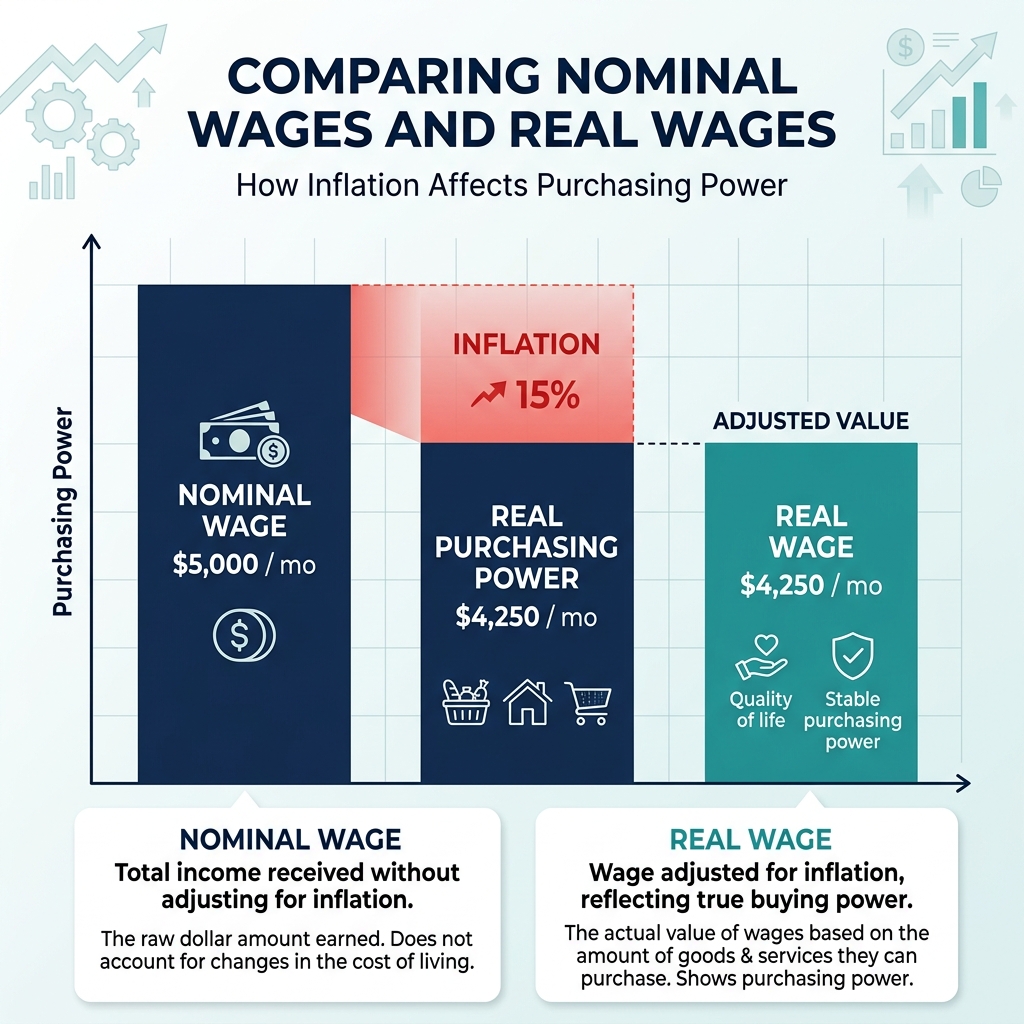
  • Nominal Wage: The actual dollar amount printed on your paycheck or employment contract. If your salary goes from $60,000 to $63,000, your nominal wage has grown by 3%.
  • Real Wage: Your salary adjusted for inflation, representing your actual purchasing power.

If inflation is running at 5%, that $63,000 now buys what $60,000 used to buy. Your *real wage growth* is negative.

To see exactly how much purchasing power you have lost (or gained) over the last year, plug your old salary, new salary, and the current inflation rate into our Salary vs Inflation Calculator. Knowing this percentage is the foundation of your negotiation. You cannot ask for a raise until your real wages have returned to zero growth.

How to Calculate Your Personal Inflation Rate

Headline inflation numbers (like the CPI) track a vast basket of goods, from used cars to medical equipment. But you do not buy an average basket of goods.

If you are a renter who recently saw a 10% rent hike, and you spend a significant portion of your income on groceries, your personal inflation rate could easily be double the national average. Conversely, a homeowner with a fixed-rate mortgage living in a low-cost area might be experiencing an inflation rate below the national average.

Before walking into a salary negotiation, you must know your actual numbers.

  1. 1.Review your bank statements for your top three fixed costs: Housing, Utilities, and Food.
  2. 2.Compare what you paid last January to what you paid this January.
  3. 3.Run your total budget through our Cost of Living Increase Calculator to see the exact dollar amount needed to offset your personal cost hikes.

Bringing a specific dollar figure to your manager, such as 'My fixed monthly living costs in this city have increased by $420,' is much harder for HR to brush off than a vague complaint about the economy.

COLA by Industry: What Are Others Getting?

Understanding what other industries are offering helps you benchmark your request. If your company is offering below-market adjustments, that data point strengthens your case. Here is a snapshot of average COLA adjustments across major sectors in 2025-2026.

Industry Avg. COLA Range Beats Inflation?
Tech 3.5% - 5.0% Yes
Finance 3.0% - 4.5% Often
Healthcare 2.5% - 3.5% Borderline
Retail 2.0% - 3.0% Rarely
Government 2.0% - 3.5% Sometimes
Education 1.5% - 3.0% Rarely
Manufacturing 2.5% - 4.0% Sometimes

If your employer is offering a raise at the bottom of your industry range, you have a strong case for requesting more. Print this comparison (or show the data on your phone) during your review. Managers respond to market data because they know underpaid employees leave, and the cost of replacing a trained worker far exceeds the cost of a competitive COLA.

For a precise calculation of how your current raise compares to inflation, run the numbers through our Salary vs Inflation Calculator.

The COLA Math: A Real-World Example

Let us walk through a concrete example so you can see exactly how to calculate the gap between your raise and your actual cost of living increase.

Step 1: Start with Your Current Salary

Assume your current annual salary is $75,000.

Step 2: Calculate Your Personal Inflation Impact

After reviewing your bank statements and using the Cost of Living Increase Calculator, you find your personal inflation rate is 4.2%. That means you need an additional $3,150 this year just to maintain the same purchasing power ($75,000 x 0.042 = $3,150).

Step 3: Compare to the Offered Raise

Your company offers a standard 3.0% raise, which amounts to $2,250 ($75,000 x 0.03 = $2,250).

Step 4: Calculate the Gap

The difference is clear: - You need: $3,150 to break even - You received: $2,250 - The gap: $900 per year

That $900 gap is not a missed bonus or a luxury. It is a real pay cut. Every month, you are effectively earning $75 less in purchasing power than you did a year ago.

Step 5: Frame It for Your Manager

Bring these exact numbers to your review:

"Based on my actual household expenses, my cost of living increased by 4.2% this year, which is $3,150. The 3% raise covers $2,250 of that, leaving a $900 annual shortfall. I am requesting an additional 1.2% adjustment to close that gap and keep my real compensation at the level we originally agreed upon."

This is not emotional. It is math. And math is very difficult to argue against.

To run your own numbers with your actual salary and inflation rate, use the Salary vs Inflation Calculator.

The Negotiation: Exactly How to Frame the Request

When it comes time for your review, separate your COLA request from your merit request.

The Maintenance Frame: Position the COLA as basic maintenance of your employment contract. *"Over the past year, my local cost of living has increased by 6.5%. I am hoping we can adjust my base salary by at least that amount so that my real compensation remains stable at the level we agreed upon when I took this role."*

The Merit Frame: Once the baseline is established, *then* you discuss your actual performance raise. *"In addition to the market adjustment, I want to discuss my performance. I exceeded my Q3 targets by 15%, and I believe a 4% merit increase is appropriate, bringing the total requested adjustment to 10.5%."*

While asking for double-digit percentage increases sounds intimidating, framing the request mathematically as COLA plus Merit demonstrates that you understand the economic reality of the market. Employers know that replacing a high performer costs 30% to 50% of the role's salary; a 10% adjustment is often the cheaper option for them.

What to Do If the Answer is No

Many managers have their hands tied by strict corporate HR bands and budget freezes. If your boss literally cannot give you the cash you need to offset inflation, you must negotiate for alternative compensation that lowers your living costs.

The most valuable alternative is Remote Work.

Commuting is incredibly expensive. Between fuel, tolls, parking, and transit passes, the average commuter spends thousands of dollars a year just getting to the office. If your employer refuses a 5% raise, ask to work from home two extra days a week. Use the Commuting Cost Calculator to show how much money you will save. For many suburban workers, cutting out a long commute two days a week puts just as much real wealth back into their budget as a traditional raise.

Other valuable alternatives to negotiate include: - Increased employer matches for your 401(k) or health savings accounts. - Additional Paid Time Off (PTO). - Home office stipends to cover internet and phone bills. - Professional development budgets (certifications or courses).

If your employer refuses to adjust your salary for inflation and refuses to offer cost-saving alternatives, they are silently asking you to finance their stagnant budgets with your declining living standards. At that point, the most effective negotiation strategy is finding a new job that pays exactly what you are worth.

Quick-Reference: Alternative Compensation Values

Alternative Typical Annual Value Difficulty to Negotiate
Remote Work (2 days/week) $3,000 - $6,000 Medium
Increased 401(k) Match $1,000 - $3,000 Easy
Extra PTO (5 days) $1,500 - $3,000 Medium
Home Office Stipend $500 - $1,500 Easy
Professional Development $1,000 - $5,000 Easy

Use this table as a cheat sheet during your negotiation. If a cash COLA is off the table, pivot to the alternatives with the highest annual value and the lowest negotiation difficulty. Stacking two or three of these can easily offset a $2,000 to $5,000 inflation gap.

Author Spotlight

The Calculory Team

Financial Strategy Analysts

We build mathematical tools and provide actionable guides to help professionals make data-driven decisions about their careers, compensation, and personal finances.

Verified Expert Educator
salary negotiationcola raise 2026cost of living adjustmenthow to negotiate a raise for inflationreal wage growth calculatorpersonal inflation ratecola vs merit raise