Health6 min readUpdated Apr 3, 2026

Gestational Age vs Due Date: What Is the Difference?

The Calculory Team

Health Content and Research

Gestational age vs due date explained in plain language. Learn how weeks pregnant, expected delivery date, LMP, ultrasound, and IVF dating fit together.

Gestational Age vs Due Date: What Is the Difference?

Key Takeaways

  • Gestational age tells you how far along the pregnancy is right now, measured in weeks and days.
  • A due date is the estimated date the baby may arrive, usually based on a 40-week pregnancy timeline from LMP.
  • Gestational age and due date are connected, but they are not the same thing. One is current progress, the other is a target date.
  • Pregnancy is usually dated from the first day of the last menstrual period, not from the day of conception.
  • Only about 5% of babies are born on the exact due date, so the due date should be treated as an estimate, not a promise.
  • Early ultrasound and IVF transfer dates can improve accuracy when LMP is uncertain or cycles are irregular.

What Is the Difference Between Gestational Age and Due Date?
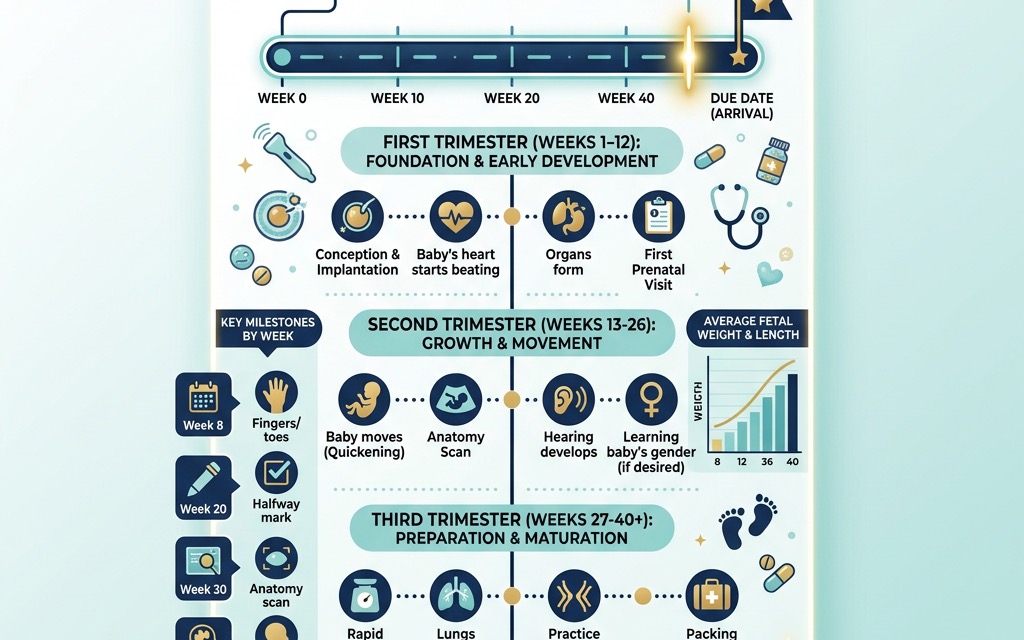
A 'Pregnancy Progress vs Deadline' infographic showing gestational age as a progress bar and the due date as an arrival flag on a timeline.

The easiest way to understand the difference is this: gestational age tells you where you are in the pregnancy today, while the due date estimates where the pregnancy ends.

If someone is 22 weeks and 3 days pregnant, that number is the gestational age. If their expected delivery date is November 14, that date is the due date. They describe the same pregnancy, but from two different angles.

Pregnancy care uses both numbers constantly. Gestational age guides appointments, trimester changes, screening windows, and fetal development milestones. The due date helps estimate when labor may happen and how much time remains.

TermWhat It MeansHow It Is Used
Gestational ageHow many weeks and days pregnant you are nowTracks growth, trimester, and timing of tests
Due dateThe estimated date the baby may be bornPlans the pregnancy timeline and delivery window

If you want to know your current progress, use the Gestational Age Calculator. If you want to estimate your expected delivery date, start with the Pregnancy Due Date Calculator.
How Is Gestational Age Calculated?

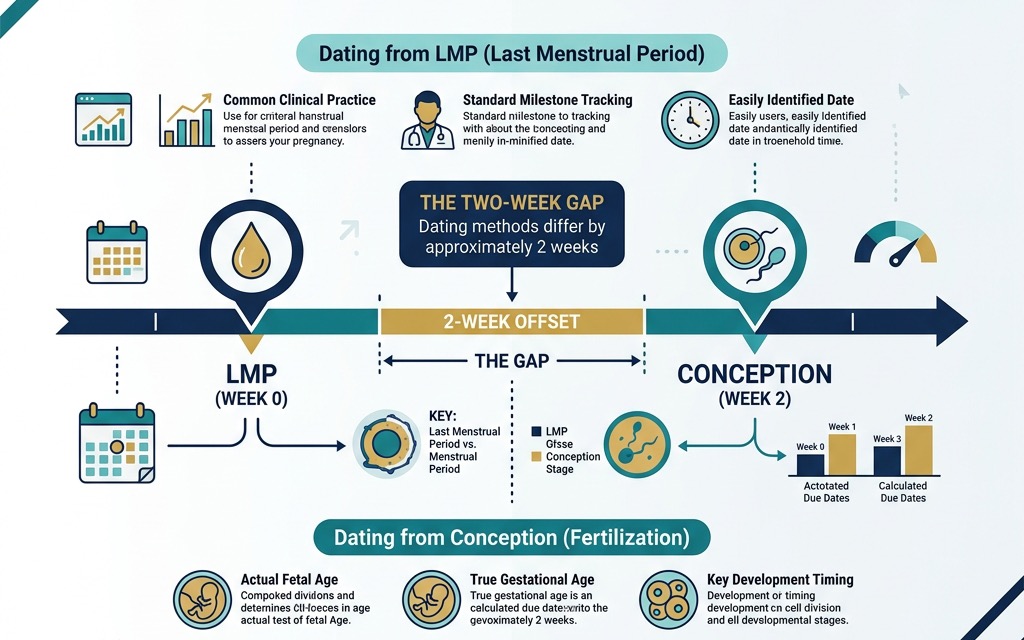
A 'Pregnancy Dating Gap' diagram explaining the two-week offset between LMP (Week 0) and Conception (Week 2).

Gestational age is usually counted from the first day of the last menstrual period, often shortened to LMP. This is the standard obstetric dating method. It means pregnancy begins on paper about two weeks before conception usually happens.

That can feel confusing at first. Most people naturally think pregnancy should start on the day the egg was fertilized. In practice, LMP is used because it is often easier to identify than the exact date of conception.

In a standard 28-day cycle, ovulation and conception typically happen around day 14. That is why gestational age is usually about two weeks more than fetal age.

Dating MethodStarting PointTypical Use
LMP datingFirst day of last periodStandard first estimate in pregnancy care
Conception datingEstimated fertilization dateUseful when conception date is known
Ultrasound datingFetal measurementsOften used to confirm or adjust dates
IVF datingKnown transfer date and embryo ageMost precise when transfer details are documented

Key insight: Gestational age is a clinical timing system. It is designed for consistency across prenatal care, not for describing the exact moment conception happened.

How Is a Due Date Calculated?

A due date is usually calculated by assuming a 40-week pregnancy, which equals 280 days from LMP. This standard is often linked to Naegele's rule. If the first day of your last period is known, the estimated due date is 280 days later.

If the conception date is known, the due date is usually calculated as 266 days after conception. The 14-day difference exists because gestational age includes the approximately two weeks before ovulation.

Known Starting PointDue Date Estimate
LMPLMP + 280 days
Conception dateConception + 266 days
Day-5 IVF transferTransfer date + 261 days
Day-3 IVF transferTransfer date + 263 days

The important thing is that a due date is an estimate, not a countdown to an exact event. Many babies arrive between 38 and 42 weeks, and only a small share are born on the exact predicted day.

If you already know your due date and want to work backward to estimate conception timing and trimester dates, the Retroactive Pregnancy Calculator is the most useful follow-up tool.

Why Gestational Age and Due Date Get Mixed Up

People often mix up gestational age and due date because both describe the same pregnancy timeline. One is given in weeks and days. The other is given as a calendar date. During appointments, apps, and online tools, the two numbers are often shown together, which makes them feel interchangeable.

They are related, but they answer different questions.

If You Want to Know...You Need...
How many weeks pregnant am I?Gestational age
What trimester am I in?Gestational age
When is my baby expected?Due date
How many weeks are left?Both, because the due date depends on gestational age

A good way to think about it is to compare pregnancy to a trip. Gestational age tells you how far along the route you are today. The due date is the estimated arrival date at the end of the route.

For a quick stage check after you know your week count, use the Trimester Calculator to see whether you are in the first, second, or third trimester.

Which Is More Accurate: LMP, Ultrasound, or IVF Dating?

Accuracy depends on how certain the starting information is. LMP is the usual first estimate, but it becomes less reliable when cycles are irregular, the exact date is uncertain, or ovulation happened earlier or later than expected.

Early ultrasound is often more accurate than LMP for dating because it uses fetal measurements from the first trimester, when developmental size differences are still small. IVF dating can be even more precise because the transfer date and embryo age are known exactly.

MethodStrengthMain Limitation
LMPSimple and widely usedLess accurate with irregular cycles or uncertain dates
First-trimester ultrasoundStrong dating accuracy early in pregnancyDepends on scan timing and measurement quality
IVF transfer datingHighly precise because dates are documentedOnly applies to IVF pregnancies

In IVF pregnancies, the IVF Due Date Calculator is especially helpful because transfer timing is known. In spontaneous pregnancies, the Pregnancy Due Date Calculator gives a solid planning estimate, but your provider may update it after ultrasound.

Gestational Age, Fetal Age, and Conception Date

Another common source of confusion is the difference between gestational age and fetal age. These are not the same.

Gestational age starts at LMP. Fetal age starts at conception. In a typical cycle, fetal age is about two weeks less than gestational age.

TermStarts WhenExample at 12 Weeks Gestation
Gestational ageFirst day of LMP12 weeks pregnant
Fetal ageConceptionAbout 10 weeks since fertilization
Due date timelineProjected end of pregnancyAbout 28 weeks remaining

This difference matters when people try to reconstruct when conception likely happened. If your goal is to estimate the likely conception window from a known date, the Conception Date Calculator and the Retroactive Pregnancy Calculator are the most relevant tools in this cluster.

Example Timeline: How the Numbers Work Together

Let us use a simple example. Imagine the first day of LMP was January 1. Using standard dating, the due date would fall 280 days later, around October 8.

If today is March 26, that pregnancy would be about 12 weeks and 1 day gestational age. The person would be finishing the first trimester and moving toward the second. The due date would still remain October 8 unless later dating information caused an adjustment.

Timeline ItemExample DateMeaning
LMPJanuary 1Pregnancy dating start point
Estimated conceptionAround January 15Approximate fertilization date in a 28-day cycle
Gestational age on March 2612 weeks and 1 dayCurrent pregnancy progress
Estimated due dateOctober 8Projected 40-week endpoint

When you see the timeline laid out this way, the difference becomes much easier to understand. Gestational age moves every day. The due date usually stays fixed unless a clinician changes it based on stronger dating evidence.

When Should You Use Each Pregnancy Calculator?

Different questions call for different calculators. Trying to answer everything with one number usually creates confusion, especially in early pregnancy.

Your QuestionBest Tool
How many weeks pregnant am I right now?Gestational Age Calculator
When is my baby due?Pregnancy Due Date Calculator
Which trimester am I in?Trimester Calculator
How do IVF dates change the timeline?IVF Due Date Calculator
If my due date is X, when did I likely conceive?Retroactive Pregnancy Calculator

The strongest pregnancy planning flow usually looks like this: estimate the due date, confirm gestational age, identify the current trimester, and then use conception-focused tools only if you need to understand the timeline backward.

Practical takeaway: Use gestational age for the present. Use the due date for planning ahead.

Frequently Asked Questions

Is gestational age the same as due date?

No. Gestational age tells you how far along the pregnancy is in weeks and days. The due date is the estimated calendar date when the baby may be born.

Why does pregnancy start from LMP instead of conception?

Pregnancy usually starts from the first day of the last menstrual period because that date is often easier to identify than the exact conception date. In a typical cycle, conception happens about 14 days later, so gestational age is usually about two weeks more than fetal age.

How is a due date calculated from gestational age?

A full-term pregnancy is usually dated as 40 weeks from LMP. If you know the current gestational age, the due date is the projected date when the pregnancy reaches 40 weeks. For example, if you are 20 weeks pregnant today, the due date is about 20 weeks from now.

Which is more accurate, due date by LMP or ultrasound?

First-trimester ultrasound is often more accurate than LMP dating, especially if cycles are irregular or the exact LMP date is uncertain. LMP remains the standard starting estimate, but providers may adjust the due date if ultrasound measurements suggest a meaningful difference.

What is the difference between gestational age and fetal age?

Gestational age counts from LMP, while fetal age counts from conception. In a typical 28-day cycle, fetal age is about two weeks less than gestational age. So at 10 weeks gestational age, fetal age is usually about 8 weeks.

Can my due date change during pregnancy?

Yes. A provider may update the due date if early ultrasound suggests the pregnancy is measuring differently than expected from LMP. Later in pregnancy, due date changes are less common because fetal size differences become more normal and less useful for dating.

How accurate is a due date in real life?

A due date is a planning estimate, not an exact prediction. Only a small percentage of babies are born on the exact due date. Many healthy pregnancies deliver within the range of 38 to 42 weeks, depending on the individual pregnancy and clinical circumstances.

Author Spotlight

The Calculory Team

Health Content and Research

We create medically informed calculators and clear educational content to help people understand pregnancy timelines, health metrics, and clinical math.

Verified Expert Educator
gestational age vs due datewhat is gestational agewhat is a due datepregnancy dating explainedweeks pregnant calculatordue date calculator guideLMP vs conception datepregnancy timelinefetal age vs gestational age