Health5 min readUpdated Apr 3, 2026

How to Use a Fertile Window Calculator Correctly

The Calculory Team

Health Content and Research

Learn how to use a fertile window calculator correctly with cycle length, ovulation timing, sperm survival, and the best days to conceive.

Key Takeaways

  • A fertile window calculator estimates the 6-day conception window, not a single guaranteed pregnancy day.
  • The most fertile days are usually the 2 to 3 days before ovulation and the day of ovulation itself.
  • A 28-day cycle often means ovulation around day 14, but longer or shorter cycles shift the window.
  • Sperm can survive up to 5 days, while the egg usually survives only 12 to 24 hours after ovulation.
  • Cycle regularity matters. The more irregular the cycle, the less accurate a calendar-based fertile window estimate becomes.
  • Ovulation predictor kits and basal body temperature can improve accuracy when used alongside a fertile window calculator.

What Is a Fertile Window Calculator?

A fertile window calculator estimates the days in your menstrual cycle when pregnancy is most likely. It does this by predicting ovulation and then building a conception window around that day.

The fertile window is not just the moment of ovulation. It includes the days before ovulation because sperm can survive inside the reproductive tract for several days. That is why a fertile window calculator usually shows a range of about 6 days, not just one day.

TermWhat It Means
OvulationThe release of an egg from the ovary
Fertile windowThe days when intercourse can lead to pregnancy
Peak fertilityUsually the 2 to 3 days before ovulation and ovulation day

If you want an estimate based on your cycle pattern, the Fertile Window Calculator is the best starting point in this cluster.
How Does a Fertile Window Calculator Work?

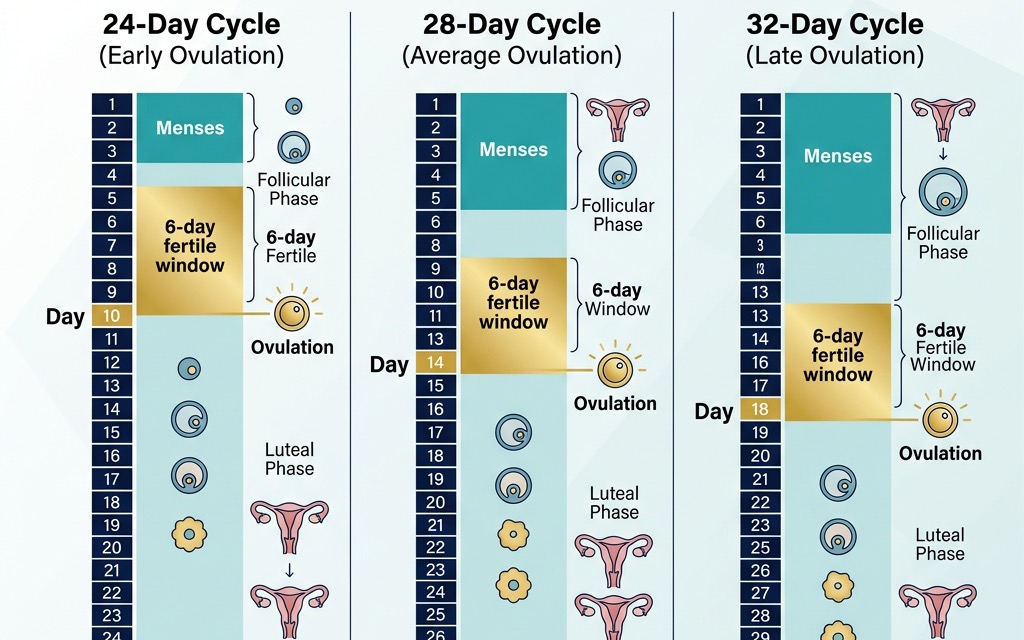
Most fertile window calculators start with one simple assumption: ovulation usually happens about 14 days before the next period, not necessarily on day 14 of every cycle.

That detail matters. In a 28-day cycle, ovulation often falls around day 14. In a 32-day cycle, it may be closer to day 18. In a 24-day cycle, it may happen closer to day 10. The luteal phase tends to stay more stable, while the earlier follicular phase varies more from person to person.

Cycle LengthEstimated Ovulation DayEstimated Fertile Window
24 daysDay 10Days 5 to 10
28 daysDay 14Days 9 to 14
32 daysDay 18Days 13 to 18
35 daysDay 21Days 16 to 21

That is why entering the right cycle length matters so much. If you are not sure what your true cycle length is, use the Menstrual Cycle Length Calculator before estimating your fertile days.

When Are You Most Fertile?

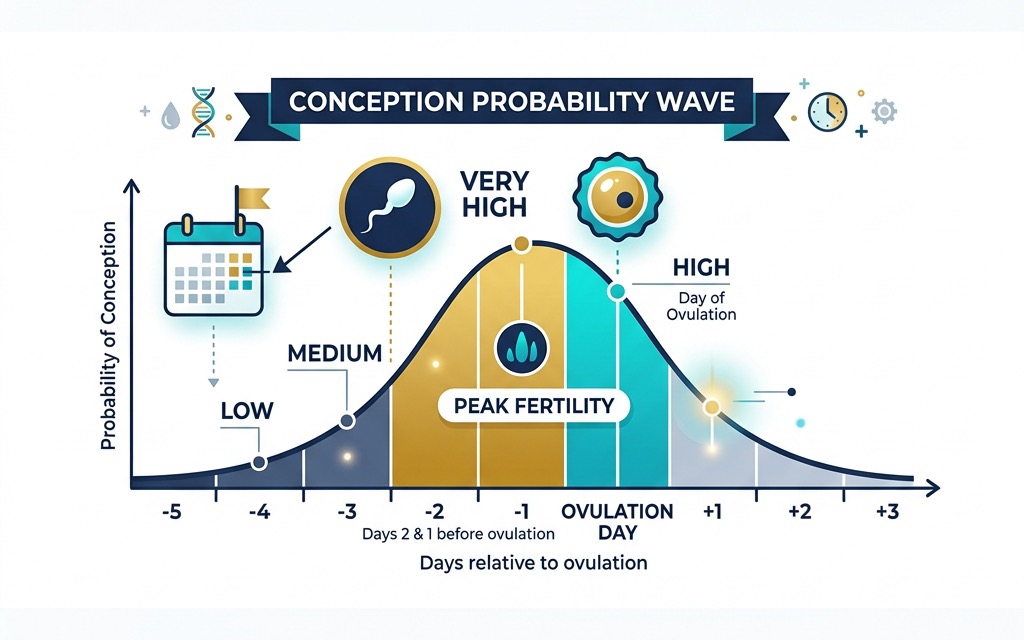
You are usually most fertile during the 2 to 3 days before ovulation and the day of ovulation itself. This is because sperm can wait for the egg, but the egg has a very short life after release.

Biologically, the fertile window exists because sperm can live up to 5 days in fertile cervical mucus, while the egg usually remains viable for only 12 to 24 hours after ovulation.

Timing Relative to OvulationChance of Conception
5 days beforePossible, but lower
3 to 2 days beforeHigh
1 day beforeVery high
Ovulation dayHigh
1 day afterUsually much lower

The biggest mistake is waiting until after ovulation is obvious. By then, the most fertile part of the window may already be closing.

How to Use a Fertile Window Calculator Correctly

Using the calculator correctly is mostly about giving it the right inputs and understanding what the result actually means.

  1. 1.Start with the first day of your last period.
  2. 2.Enter your average cycle length, not just your best guess from one month.
  3. 3.Treat the result as an estimate of your fertile range, not an exact promise.
  4. 4.Focus most on the 2 to 3 days before predicted ovulation.
  5. 5.Update your estimate if your cycle length changes.
Do ThisAvoid This
Use your average cycle lengthUsing a random cycle length from memory
Plan intercourse across the full windowWaiting for a single "best" day only
Track multiple cycles for a patternAssuming every cycle is identical
Combine with ovulation signs if neededTreating the calculator as a medical diagnosis

If your main goal is predicting ovulation more directly, the Ovulation Calculator is the most natural companion tool.

Why Cycle Length and Regularity Matter

A fertile window calculator works best when cycles are fairly regular. If your cycle is consistently 28 to 30 days, the estimated ovulation window is more useful. If your cycle varies from 24 days one month to 36 days the next, the estimate becomes much less reliable.

That does not mean the tool is useless. It means the window should be treated as broader and less precise, and it may be worth pairing it with more direct ovulation tracking methods.

Cycle PatternCalculator Reliability
Very regular cyclesHigher
Mostly regular cyclesGood
Often variable cyclesModerate
Very irregular cyclesLower

A calculator is strongest as a pattern-based planning tool. It becomes weaker when the underlying cycle is unpredictable.

What a Fertile Window Calculator Cannot Tell You

A fertile window calculator can estimate likely fertile days, but it cannot confirm that ovulation actually happened. It also cannot diagnose fertility problems, hormone disorders, or the reason a cycle is irregular.

It is a calendar-based estimate, which means it works from timing assumptions rather than direct biological confirmation.

A Fertile Window Calculator Can...A Fertile Window Calculator Cannot...
Estimate likely fertile daysConfirm ovulation with certainty
Help plan intercourse timingDiagnose infertility
Use cycle math to estimate ovulationExplain why cycles are irregular
Support fertility awarenessReplace clinical advice or testing

Key insight: The calculator is a planning tool, not a fertility diagnosis.

How to Improve Accuracy Beyond Calendar Math

If you want more confidence, combine calendar estimates with signs that track ovulation more directly. Ovulation predictor kits can detect the LH surge that often happens 24 to 36 hours before ovulation. Basal body temperature can help confirm ovulation after it happens. Cervical mucus changes can also provide clues.

Using multiple signals helps because each method fills a different gap. The calendar gives a forecast, OPKs help identify the approach of ovulation, and temperature helps confirm that it already happened.

Tracking MethodBest Use
Fertile window calculatorCycle-based estimate and planning
Ovulation predictor kitDetecting the LH surge before ovulation
Basal body temperatureConfirming ovulation after the shift
Cervical mucus trackingWatching for naturally fertile days

For people trying to map likely fertilization timing after the fact, the Conception Date Calculator is the best follow-up tool.

When to Use Other Fertility and Pregnancy Calculators

A fertile window calculator is only one part of the fertility and pregnancy timeline. Different questions need different tools.

Your QuestionBest Tool
What are my most fertile days this cycle?Fertile Window Calculator
When am I likely to ovulate?Ovulation Calculator
What is my average cycle length?Menstrual Cycle Length Calculator
When did conception likely happen?Conception Date Calculator
When is my baby due if I conceive?Pregnancy Due Date Calculator

The best workflow is usually simple: track cycle length, estimate ovulation, identify the fertile window, and only move to pregnancy timeline tools after conception is likely or confirmed.

Practical takeaway: Use the fertile window calculator to plan ahead, not to expect exact biological certainty.

Frequently Asked Questions

How do you use a fertile window calculator correctly?

Enter the first day of your last period and your average cycle length, then use the result as an estimate of your fertile range. Focus especially on the 2 to 3 days before predicted ovulation and the ovulation day itself.

How many days is the fertile window?

The fertile window is usually about 6 days long: the 5 days before ovulation plus the day of ovulation. That range exists because sperm can survive for several days, but the egg usually lives only 12 to 24 hours after release.

What are the best days to get pregnant?

The best days are usually the 2 to 3 days before ovulation and the day of ovulation. This is when sperm is most likely to already be present when the egg is released.

Is a fertile window calculator accurate for irregular cycles?

It is less accurate when cycles are very irregular because ovulation timing becomes harder to predict from calendar math alone. In irregular cycles, it is often better to combine the estimate with ovulation predictor kits or other tracking methods.

Does ovulation always happen on day 14?

No. Ovulation often happens around day 14 only in a 28-day cycle. In longer cycles it usually happens later, and in shorter cycles it usually happens earlier.

Can I get pregnant outside the fertile window?

It is much less likely outside the fertile window because sperm cannot survive indefinitely and the egg is viable for only a short time. Still, exact timing can shift if ovulation happens earlier or later than expected.

Should I use a fertile window calculator or an ovulation calculator?

Use a fertile window calculator when you want the full conception range and use an ovulation calculator when you want a more direct estimate of the ovulation day itself. Many people benefit from using both because they answer slightly different questions.

Author Spotlight

The Calculory Team

Health Content and Research

We create medically informed calculators and practical educational content to help people understand fertility timing, pregnancy math, and everyday health decisions.

Verified Expert Educator
how to use fertile window calculatorfertile window calculatorbest days to get pregnantwhen am I most fertileovulation and fertile windowcycle length fertilityfertile days calculator guideconception timing