Quick Answer: How to Calculate Profit Margin
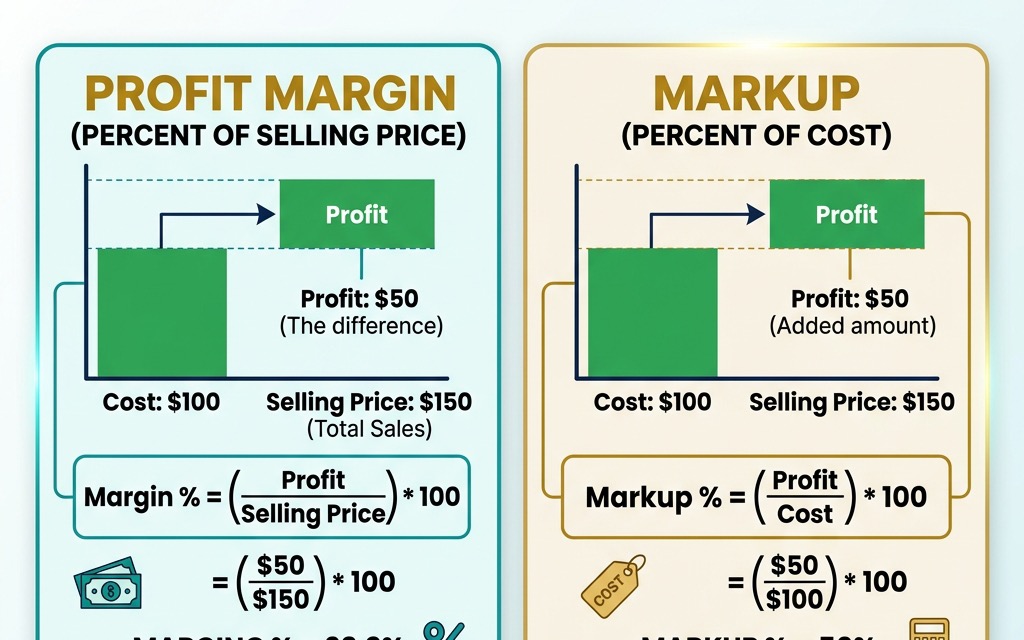
To calculate profit margin, divide profit by revenue and multiply by 100. The basic formula is Profit Margin = (Profit / Revenue) x 100. For a business with $150,000 in revenue and $16,500 in net profit, the net margin is ($16,500 / $150,000) x 100 = 11%.
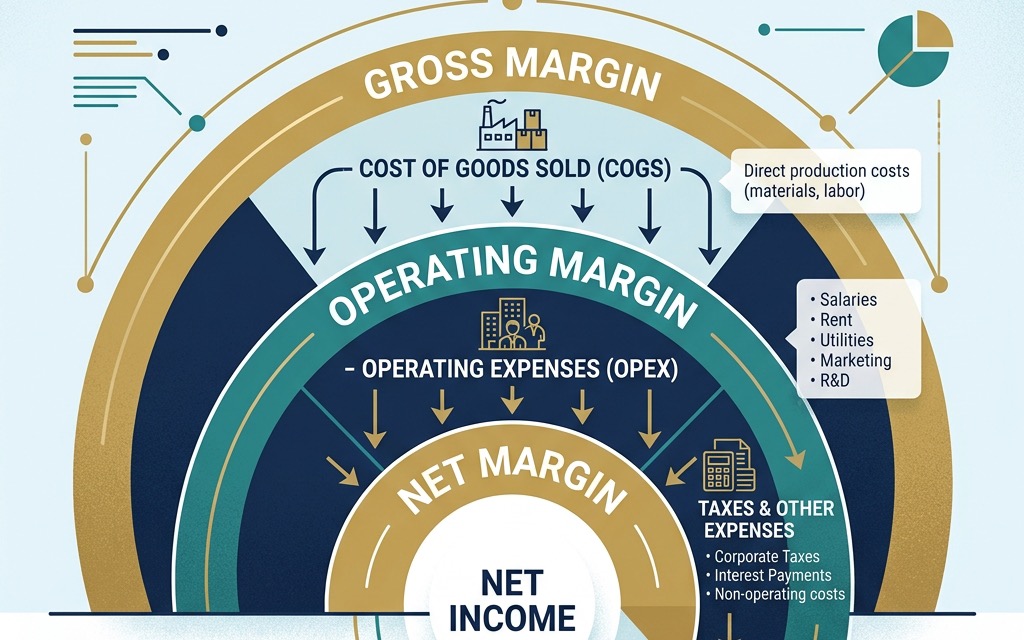
Which profit figure you use changes the result. Use gross profit (revenue minus COGS) for gross margin, operating profit (after overhead) for operating margin, and net profit (after every expense including interest and taxes) for net margin.
The Three Formulas at a Glance
| Margin Type | Formula | $150K Revenue Example |
|---|---|---|
| Gross | (Revenue - COGS) / Revenue x 100 | ($150K - $90K) / $150K = 40% |
| Operating | (Revenue - COGS - OpEx) / Revenue x 100 | ($150K - $125K) / $150K = 16.7% |
| Net | Net Income / Revenue x 100 | $16,500 / $150K = 11% |
The 30-second rule: Track all three margins together. A healthy gross margin with a weak net margin signals overhead or debt problems. Scroll down for full step-by-step walkthroughs and industry benchmarks. To run your own numbers right now, use the Profit Margin Calculator.